
Building on 3+ Acres in Cass County? Here's What You Need to Know About Septic Requirements Before You Buy
You found the perfect acreage. Good views, a tree line along the back, maybe a barn that has seen better decades. The price is right and your realtor says another offer could land any day. Then somebody asks the question nobody wants to hear halfway through a deal: where is the septic system going to go?
In rural Cass County, that answer can decide whether you build the house you pictured, build something smaller, or don't build at all. Land that looks perfect from the driveway can fail once someone actually tests the soil. We're Rogers Excavating & Septic, and we've spent more than 26 years working with septic systems and dirt in Cass, Jackson and Johnson counties. Here is what we tell land buyers before they sign.
Why Septic Requirements Matter Before You Sign
Most rural Cass County property has no access to municipal sewer. If you build a home outside city limits, you're responsible for putting in an on-site wastewater system, and the county has to approve it before anything goes in the ground.
Here's the part that catches people off guard. Being allowed to build a house on a piece of land and being able to put a septic system on it are two separate questions. A lot can have road frontage, clean zoning, and a great view and still have soil that won't support a standard septic system. When that happens, you're looking at a different design, a bigger budget, or sometimes a lot that doesn't fit your plans.
Finding that out after closing is expensive. Finding it out before closing is helpful information.
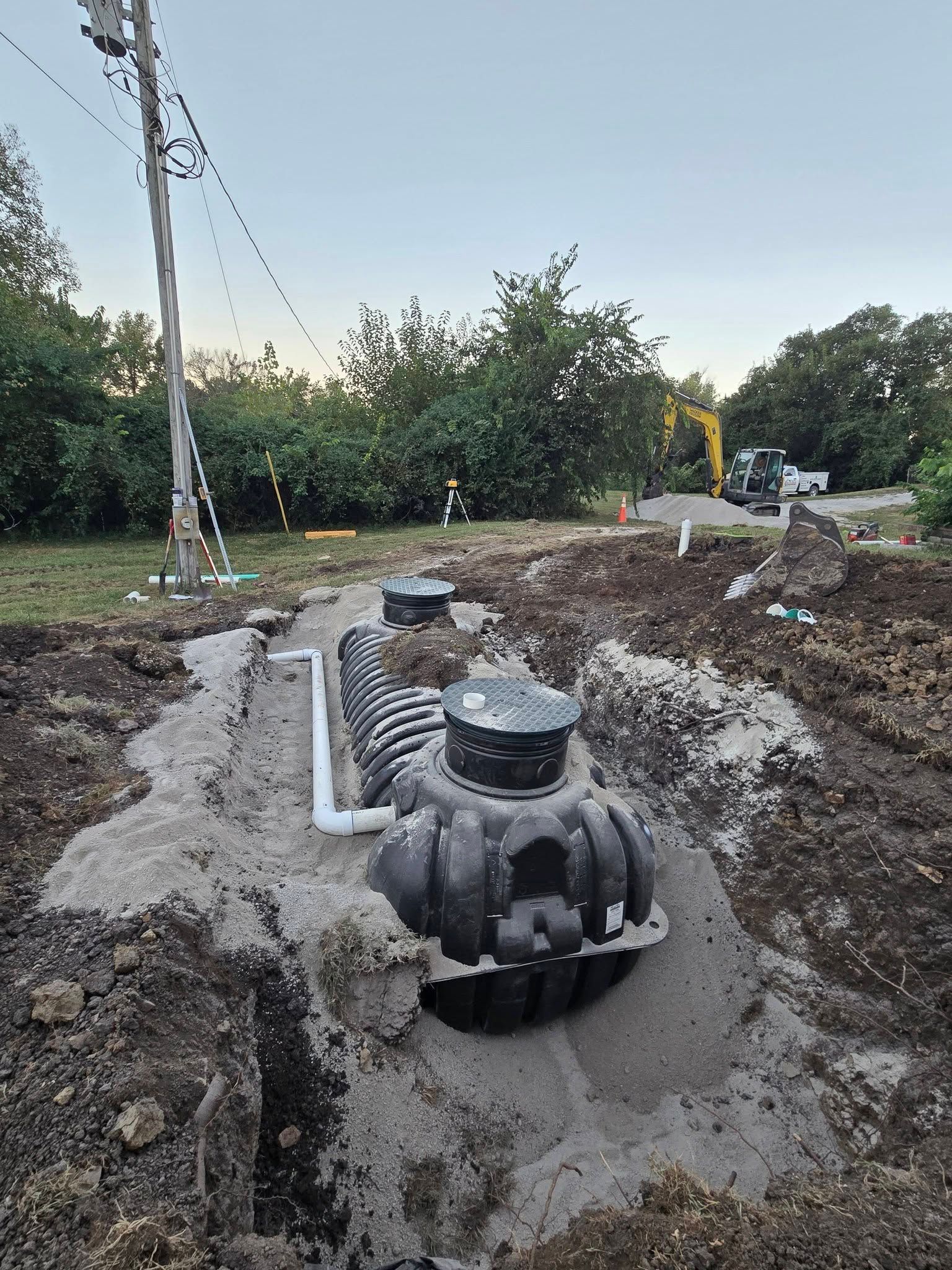
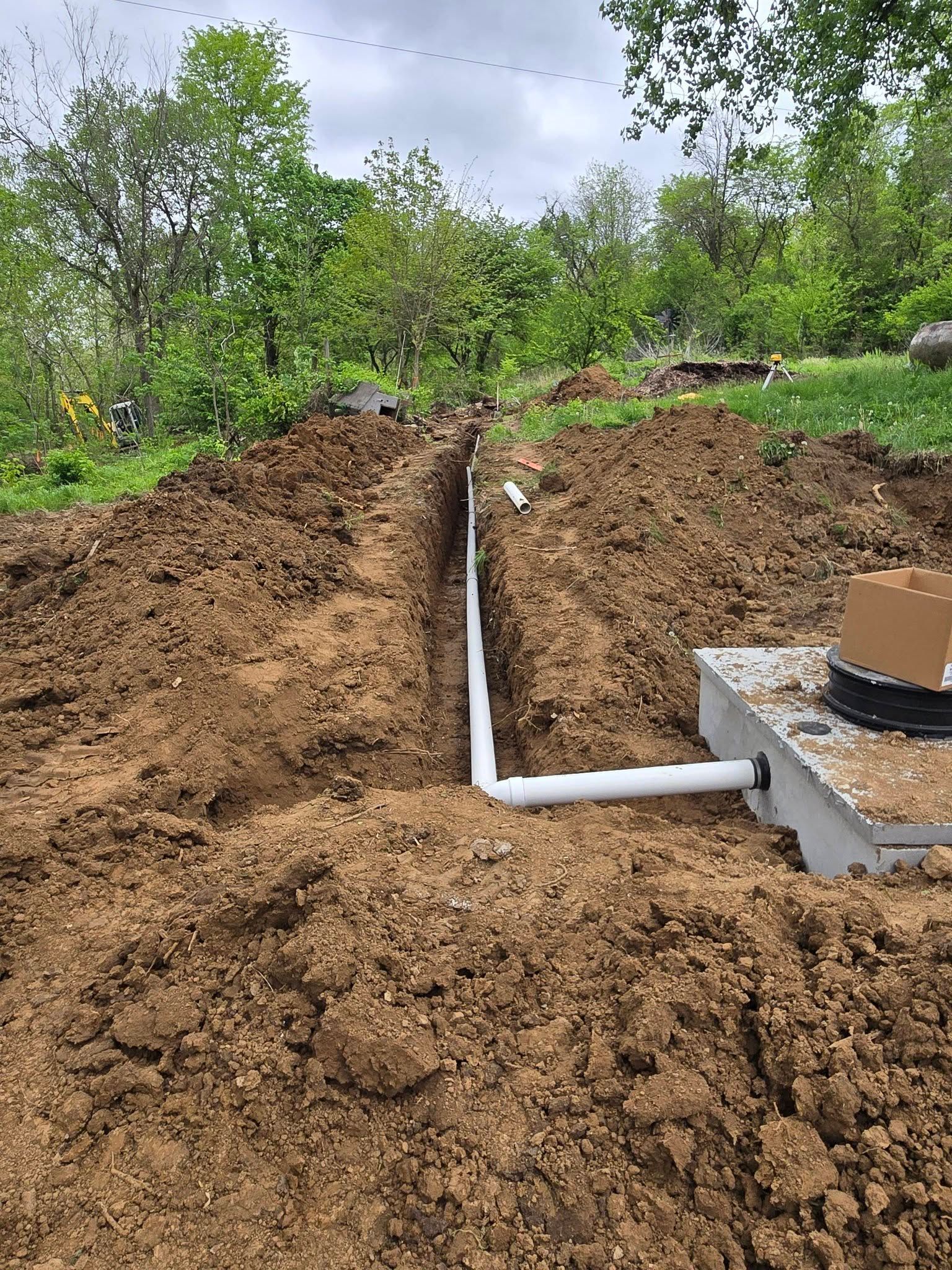
Step 1: Soil Morphology and Percolation Testing (Do This Before You Buy)
Everything starts with the soil. Cass County requires soil morphology data with a septic permit application, and a state-certified soil scientist has to perform the evaluation. The septic design then has to match what that evaluation found.
A soil morphology test looks at what's really under the surface: texture, color, structure, and how deep you go before hitting something restrictive like heavy clay or rock. Those details show how water will move through the ground, and that decides which type of system the lot can support.
You'll also hear about percolation, or "perc," rates. That's how fast water drains through the soil. Under the county's onsite wastewater ordinance, a standard system needs soil that percolates no slower than 120 minutes per inch. If your soil is slower than that, a conventional on-site system is off the table. One number can change what's buildable on your property.
Our advice is simple. Order the testing before closing. Get written access from the seller, or make the soil evaluation a contingency in your offer. A good result costs you a little time. A bad one can keep you from buying a lot you can't use. The county also treats site evaluations as valid indefinitely as long as the soil hasn't been disturbed, so a test done while you're under contract keeps its value after you close. We can help prospective buyers set up soil morphology testing, and we'll explain what the results mean for your build in plain English.
Step 2: Know Which Septic System Your Lot Will Require
The soil results point to a system type. In Cass County, land buyers usually run into three options.
Conventional Systems
A septic tank sends wastewater out to a lateral field, where the soil handles the final treatment. When the soil drains in the right range, and there's enough depth before a restrictive layer, this is usually the simplest path. Slower soils may need a modified layout, like an alternating dual-field design.
Lagoons
A single-residence lagoon is a wastewater stabilization pond. Cass County doesn't permit them on lots smaller than 3 acres unless the county commission approves a variance. That's why 3 acres gets thrown around so much. But 3 acres is the floor, not a guarantee. Setbacks add up fast. Lagoons need to sit 100 feet from property lines, 50 feet from a building foundation and 500 feet from a sinkhole. On a long, narrow 3 acre lot, those distances eat up your usable space.
Aerobic Treatment Units (ATUs)
An ATU pushes air through the wastewater so beneficial bacteria can break it down more thoroughly than a tank alone. County rules allow a properly sized Class I NSF Standard 40 listed ATU ahead of a lagoon, and with one in place, the lagoon can be built shallower (3 feet instead of 4). We're an authorized Aero-Stream reseller, and the Aero-Stream system is what we install on Cass County lagoon properties.
Step 3: Understand Cass County Permitting and Regulations
Septic permits come from the Cass County Building Codes, Environmental Health & Zoning Department in Harrisonville. A complete application includes the legal description of the property, a plot plan, a site evaluation form, soil data from a soil scientist, trench details, and a system design from an installer or a Missouri-registered engineer. The application fee is currently $300.
Once a complete package is in, the department has five days to approve it or tell you what needs to change. Incomplete plans are where the delays happen, and extra review time can come with hourly fees.
Installers matter here too. Missouri requires people who install on-site systems to be registered with the Department of Health and Senior Services, with a limited exception for homeowners. Advanced systems like ATUs call for an installer with the right advanced certification. Richard Rogers earned his Advanced OWTS Installer Certification through Missouri DHSS in July 2023. Before you hire anyone, ask to see theirs.
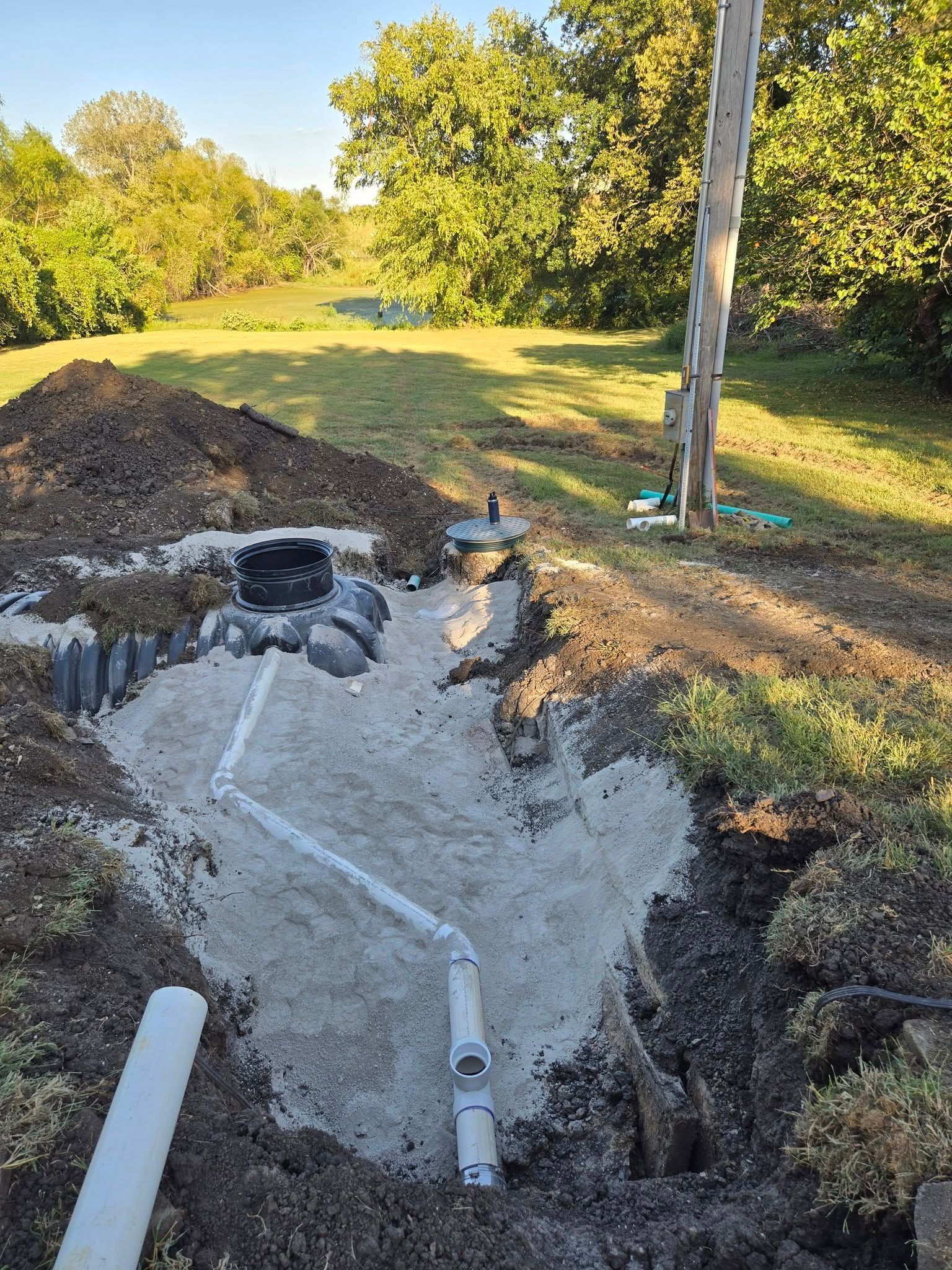

Common Mistakes Land Buyers Make
We see the same few problems over and over:
- Buying before testing the soil. A purchase agreement doesn't change what's underground.
- Assuming any lot can have a lagoon. Under 3 acres, it takes a county commission variance. Over 3 acres, setbacks still apply.
- Underestimating installation cost. Septic is a real line item in a rural build, not an afterthought.
- Waiving contingencies too early. Confirm the soil with a local installer before your inspection period runs out. We cannot stress this enough.
What This Means for Your Budget and Timeline
Septic is one of the bigger costs in a rural build, and the range is wide. As a ballpark in 2026, a conventional gravity system usually runs $3,000 to $7,000, and an aerobic treatment unit usually runs $10,000 to $18,000. Soil, system type, site layout, and access all move the price, so treat those as rough ranges and not a quote. We're working on a separate cost guide for Cass County landowners.
What we can give you is the order of operations: soil and perc testing, system design, county permit, installation, then inspection. Work backward from your closing date and your builder's schedule, and the testing needs to happen first. Skipping ahead is how people end up with a finished foundation and no approved place for the wastewater.
How Rogers Excavating & Septic Can Help
Richard is a U.S. Army veteran, and he runs this company the way you'd hope: he shows up, he explains your options and he tells you the truth about your land, even when it's not what you wanted to hear. We handle the septic side from start to finish, so you're not juggling a pile of contractors.
For land buyers, that means:
- Soil morphology testing arranged through a certified soil scientist before you close
- System design and county permit coordination
- Certified Aero-Stream ATU installation
- Excavation, grading, land clearing, and pond work once you're ready to build
We work in Pleasant Hill, Warrensburg,
Peculiar, Belton and Raymore, and across Cass, Jackson and Johnson counties. You can see everything we do on our septic services page.
Considering a lot in Cass County? Get a soil evaluation before you buy. Call Rogers Excavating & Septic at (816) 837-0597 or request a free quote. We actually answer the phone.
Frequently Asked Questions
Do I need a septic permit before I can build in Cass County?
Yes. A new on-site wastewater system needs a permit from the Cass County Building Codes, Environmental Health & Zoning Department before installation. The application includes soil data from a soil scientist and a system design.
Can I put a lagoon on any size lot in Cass County?
No. Single-residence lagoons aren't permitted on lots under 3 acres unless the county commission grants a variance. Even on larger lots, your soil and the required setbacks decide whether a lagoon will fit.
What is an Aero-Stream ATU system and why does it matter for lagoon properties?
Aero-Stream is an aerobic treatment unit that adds oxygen to wastewater so bacteria can treat it before it moves on. County rules allow a Class I NSF Standard 40-listed ATU ahead of a lagoon, and it lets the lagoon be built shallower.
What happens if my land's percolation rate fails the test?
If soil percolates slower than 120 minutes per inch, a standard on-site system isn't allowed. Other designs may be possible depending on what the soil evaluation shows, but the cost changes. Know that before you close.
How long does soil morphology testing take?
The work on your property is usually a single visit. Scheduling and the written report are what stretch the timeline, so start early and don't wait until your inspection period is almost over.